The MICE industry in India is entering an ambitious new phase. As the country builds larger convention centres, attracts international exhibitions, strengthens its destination infrastructure and positions itself as a global business-event hub, the conversation around who will lead this growth is becoming increasingly important. At the heart of that conversation is the growing presence of women. Women have always been an integral part of travel, tourism, hospitality and events. Yet their contribution has not always translated into equal representation at the highest levels of decision-making.
This is beginning to change. The Indian MICE ecosystem is witnessing a new generation of women who are not simply participating in the industry but influencing its direction. The Indian Exhibition Industry Association has already created dedicated platforms for women leaders in exhibitions. At the same time, recent MICE leadership forums have increasingly brought women professionals into conversations around strategy, innovation and the future of business events. The opportunity ahead is considerable. India is seeking a larger share of the global business-events market and that ambition requires a workforce that reflects the diversity of the clients, delegates and communities it serves. Women can be central to that transformation.
The MICE industry is fundamentally a people business. It depends on relationships, communication, negotiation, creativity, problem-solving and the ability to understand what makes an event meaningful for its participants. These are not gender-specific qualities, but women professionals have increasingly demonstrated how these skills translate into strong business outcomes. Women in MICE are already visible across the entire value chain. They work with convention bureaus, tourism boards, hotels, airlines, professional conference organisers, destination management companies, exhibition organisers, event agencies, associations and corporate travel departments. Their responsibilities range from designing experiences and managing large-scale events to negotiating with suppliers, building international relationships and developing destinations.
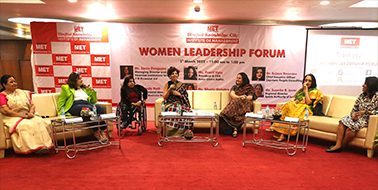
Indian Exhibition Industry Association’s Women’s Leadership Forum
The transformation is particularly visible in exhibitions and business events. The Indian Exhibition Industry Association’s Women’s Leadership Forum, for instance, was created specifically to encourage inclusive leadership, networking, mentoring and skill development for women in the exhibition sector. This is important because representation creates aspiration. When a young professional sees women occupying positions such as CEO, managing director, convention bureau head, exhibition director or hotel general manager, leadership becomes something tangible rather than distant.
The next step, however, is to move beyond celebrating individual success stories and build an ecosystem in which women can consistently progress from entry-level and middle management roles into positions where they control budgets, strategy and organisational direction.
India’s MICE ambitions are no longer limited to hosting meetings. The country wants to attract major international congresses, incentive groups, exhibitions, association conferences and corporate events. This means competing with established destinations across Asia, Europe and the Middle East on infrastructure, creativity, service quality, technology and experience. Women can contribute to this competitiveness in several ways. First is the ability to understand changing traveller and delegate expectations. The modern business-event participant increasingly wants more than a conference room. Sustainability, wellness, cultural immersion, local experiences, accessibility, safety, food, community engagement and personalisation are becoming increasingly important. Women leaders who bring diverse perspectives into event design can help the industry move beyond traditional modes.
Second is relationship-building management. MICE is built on long-term relationships rather than one-time transactions. Winning an international conference can take years of association building, bidding, networking and stakeholder engagement. Strong communication and collaborative leadership are therefore essential. Third is innovation. Technology is reshaping event planning through artificial intelligence, data analytics, digital registration, audience engagement platforms and personalised experiences. Women must not merely be users of these technologies but decision-makers shaping how technology is deployed.
And fourth is community impact. MICE events can generate significant economic value for destinations, but their impact extends to local businesses, artisans, transport providers, restaurants, guides and cultural institutions. A more inclusive approach to event planning can ensure that the economic benefits of business events reach a wider section of society.
Despite the progress, the road to leadership remains uneven. Tourism and hospitality provide significant employment opportunities for women, but representation tends to decline as professionals move up the hierarchy. A 2025 analysis by Equality in Tourism found that women accounted for 54% of the tourism workforce globally but only 33% of tourism board positions. The figures underline a familiar contradiction: women are highly visible in the workforce but considerably less visible in decision-making.

WomenLeaders India Fellowship
India faces similar challenges across its broader corporate ecosystem. The 2024 AIMA-KPMG Women Leadership Report found that 83% of surveyed organisations had increased the number of women in leadership positions over the previous five years, indicating progress. Yet only half of women leaders surveyed reported pay parity with male peers. For women in MICE, the challenges can be particularly complex because of the nature of the industry itself. Events rarely operate strictly within office hours. Conferences may begin early in the morning and end late at night. Exhibitions can involve long days on the show floor. Incentive programmes require travel, site inspections and constant availability. International business events can mean frequent travel and irregular schedules.
For professionals with family responsibilities, this can create a difficult balancing act. The issue is not that women cannot manage demanding careers. The larger question is whether organisations are structured in ways that allow talented professionals to sustain those careers over the long term. Workplace culture therefore becomes critical. A woman should not have to choose between being perceived as committed to her career and being committed to her family.
There is another less visible barrier: access to networks. MICE is a relationship-driven industry. Business frequently develops through informal conversations, industry gatherings, hosted dinners, site inspections, association meetings and international networking platforms. Professionals who are able to participate consistently in these networks often gain access to opportunities that may not be advertised. Women who are unable to attend late-night networking events or undertake frequent travel can sometimes find themselves outside these informal circles. This is why structured networking and mentoring programmes are important. The industry needs to ensure that networking is not dependent exclusively on informal social environments.
Women also need stronger professional networks of their own. Peer groups can provide access to knowledge, mentors, business opportunities and, equally important, confidence. A senior woman leader who actively mentors younger professionals can have an influence that extends far beyond her own organisation. The industry’s responsibility is to create more such bridges.
The conversation about women in MICE should also move beyond the familiar phrase “breaking the glass ceiling.” The objective should not simply be to help a handful of exceptional women reach the top. The real transformation will come when leadership pipelines become broad enough that women’s presence in senior positions is considered normal rather than remarkable. That requires organisations to examine recruitment, promotion, compensation, leadership training and succession planning.
The MICE Leadership Summit 2026 in Hyderabad, for example, brought together more than 300 participants and 20-plus speakers to discuss India’s growing position in the global business events landscape. Such platforms demonstrate the increasing importance being placed on leadership, collaboration and professional networks within the sector.
Young women entering MICE should therefore be encouraged to think beyond traditional job descriptions. Event management is no longer simply about executing an event. The most successful professionals will understand destination economics, business development, technology, sustainability, marketing, government policy and international markets. They must also be encouraged to negotiate, ask for leadership opportunities and develop commercial skills. At the same time, the responsibility cannot be placed entirely on women to adapt. Organisations must change alongside them.
The growth of India’s MICE industry presents a unique opportunity. As the country builds its reputation as a global business events destination, it can simultaneously build a more inclusive leadership model. The objective should not be to create a separate category called “women in MICE” indefinitely. The ultimate measure of progress will be when women are simply recognised as leaders in MICE.
India’s MICE industry is entering a period of enormous potential. The country has the infrastructure, talent, destinations and ambition to become a major global business events hub. But its greatest asset will ultimately be its people. Women are already part of that story. The next chapter must give them a greater role in writing it.

“Today, India’s MICE sector is projected to cross ₹2,500 crore in business volume, with women entrepreneurs playing an increasingly important role. They bring a unique perspective to event planning, combining operational efficiency with a strong understanding of audiences and their expectations. Their strengths lie in creating inclusive experiences, building meaningful relationships and developing concepts that blend tradition with contemporary ideas. However, women in MICE continue to face challenges. Irregular working hours, extensive travel and demanding event schedules can be difficult to balance with family responsibilities and societal expectations. Access to finance remains another hurdle, with financial instruments often lacking the flexibility required by women-led businesses. Ageism, gender bias and limited representation in leadership positions also remain concerns.
The way forward requires stronger institutional support. Governments and financial institutions should provide flexible funding and skill-development opportunities, while colleges can introduce MICE-focused programmes to create future talent. Technology can further help women-led businesses streamline operations and expand their reach. Women have long been the unsung architects of gatherings in India. Today, they are redefining MICE through creativity, inclusivity and resilience. With greater access to finance, training and leadership opportunities, women can play a defining role in shaping the future of India’s MICE industry, said Jyoti Varma, Industry Expert.

“MICE is fundamentally a people business. You work with customers, partners, speakers, delegates and, equally importantly, your own teams. The profession calls for communication, patience, persistence, creativity and, above all, a genuine understanding of people. I have always felt that women bring a particular strength to this kind of profession. They are often intuitive about people, sensitive to situations and able to build a connection that goes beyond the transaction. That ability to understand people and bring them along can be invaluable when managing a client, building a team or working under pressure. There is, however, much more to build in India. Our convention ecosystem needs stronger infrastructure, dedicated convention bureaus and greater collaboration across destinations, venues, associations and industry stakeholders. Exposure to international business events and global practices is equally important in helping Indian professionals bring new ideas and standards home.
That is why the environment we create matters. It is not only about women stepping forward, but also about leaders and colleagues, including men, creating opportunities, trusting people with responsibility and making room for different paths to grow. When the environment is built on trust and respect, talent has the space to flourish. Today, I see training and knowledge-sharing as one way of giving back to an industry that has been an important part of my journey. Encouraging more women to enter, learn, lead and create their own path can only strengthen the profession,” stated Anitha Niranjan, Managing Director, Global Knowledge Academy.

“India’s MICE industry is entering a significant growth phase. According to IMARC Group, the Indian MICE market was valued at approximately US$116 billion in 2025 and is projected to reach US$184.8 billion by 2034, growing at a CAGR of 5.04%. Behind this growth are thousands of women who are already contributing across the MICE ecosystem and increasingly taking on leadership roles that are shaping the industry’s future. The next phase of MICE will not simply be about larger events. It will be about innovation, technology, sustainability, inclusivity and experiences that create measurable business value. Women can lead this transformation by embracing AI, data analytics, digital marketing, hybrid-event technology and personalised communication, while preserving the human connection that remains at the heart of hospitality and events.
The industry must also create stronger pathways for women through mentorship, leadership opportunities, entrepreneurship and greater participation in strategic decision-making. The objective should be to build a pipeline of women who can become CEOs, convention centre leaders, destination strategists, entrepreneurs and industry decision-makers. As India strengthens its position as a global destination for business events, women can become a powerful force connecting business, hospitality, aviation, culture and technology,” added Kanchan Verma, Cluster Director of Marketing & Airlines Partnership, ExpoInn Suites & Convention.
The future of Indian MICE will not be shaped by women alone, nor by men alone. It will be shaped by leadership that values capability over stereotypes, collaboration over hierarchy and opportunity over convention. If India wants to compete globally, it cannot afford to leave half its talent on the sidelines. The women working across India’s MICE ecosystem are not waiting for the future to arrive. They are already building it.
